
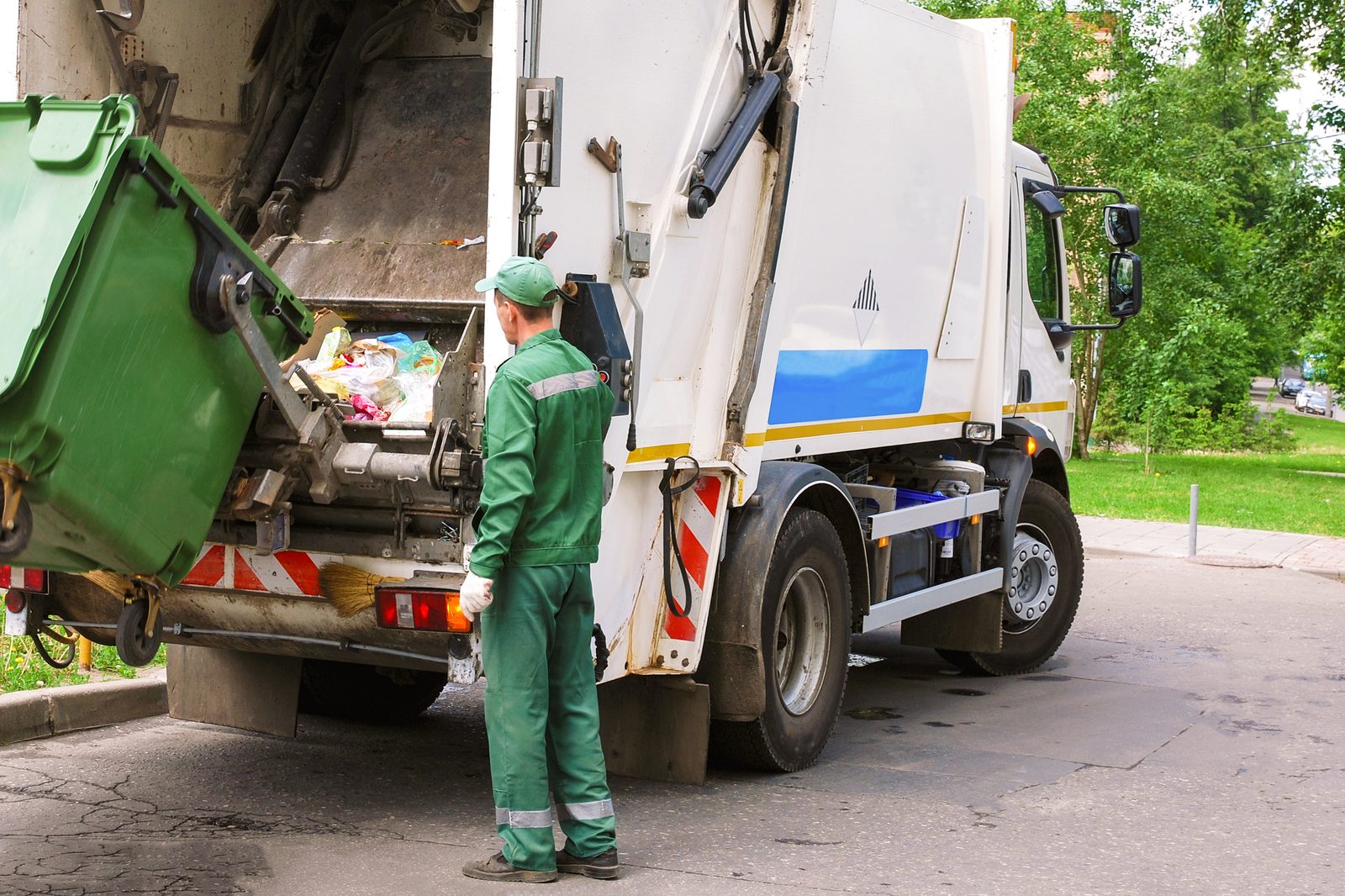
Waste & refuse
Refuse fleet protects crews and pedestrians with side detection
Result: Fewer near-miss events reported on route
Representative deployment based on typical fleet installations; figures are illustrative pending customer-approved data from JMK.
The hardest environment in road transport
A refuse truck on a residential route is a uniquely difficult safety case. The vehicle stops every few metres. Crew members work on foot around it all shift — often directly behind or beside the vehicle, in its blind spots, in the dark of early-morning collections. Add parked cars, school runs and cyclists, and the zone around the vehicle is never clear for long.
The operator’s safety reviews kept surfacing the same pattern: not collisions, but near-misses — moments where a crew member, pedestrian or cyclist was in a blind zone as the vehicle moved off or turned. Every one was a warning.
What was fitted
- Nearside and rear-view cameras with dedicated in-cab monitor views that switch automatically with indicators and reverse gear
- Radar and ultrasonic detection along the nearside — the highest-risk zone — with alerts that escalate as a person gets closer to the vehicle’s path
- In-cabin camera and MDVR, recording all channels so every reported near-miss could be reviewed in the next toolbox talk rather than debated from memory
The kit was specified for the realities of the job: IP69K sealed cameras that survive daily washdown, heated variants for winter starts, and housings placed clear of the lifting gear.
What changed
- Drivers gained a continuous picture of the nearside — the zone where crew and cyclists actually are — rather than a mirror glance
- Reported near-miss events fell across the route network, and the ones that did occur produced footage that improved procedures instead of blame
- Crew confidence improved. Loaders knew the driver could see them; the alert tones became part of the crew’s working rhythm around the vehicle
Lessons for similar operations
- Prioritise the nearside: it’s where the people are, and where mirrors are weakest.
- Match hardware to washdown reality — sealing ratings are not a paper exercise on a refuse fleet.
- Use recorded near-misses as training material: the same clip that closes an incident report can prevent the next one.
Our team can configure the same package for your collection vehicles, including white-label branding for distributors serving municipal contracts.